
How to Check Criminal History in Marion County
No single Marion County search contains every part of a criminal history. Begin with the kind of event you need to confirm. The free Oregon Judicial Department Records and Calendar Search is the best first stop for filed state charges and case outcomes. MCSO Jail Viewer answers current or recent county custody questions. A sheriff or city police report must come from the agency that wrote it. The OSP Criminal History Record Checks program provides the state repository response.
Gather a full name, date of birth when the official form permits it, likely date range, and any case, incident, or booking number. Check spelling variants. Common names need more than a name match. A final judgment or fingerprint-based own-record copy is stronger identity evidence than a bare search-result row.
- Choose the creator: court, jail, police agency, or OSP repository.
- Search with the narrowest reliable name and date details available.
- Compare court, agency, and booking numbers before treating two entries as the same event.
- Open the case register or request the source record to learn the outcome.
- Order a certified court copy or fingerprint-based own record when formal proof is needed.
Four Marion Criminal Record Custodians
An arresting officer creates the incident report. MCSO creates a separate booking profile when the jail accepts a person. The Marion County District Attorney decides which charges to file, and the Circuit Court records the complaint, hearings, judgment, and sentence. OSP CJIS receives qualifying arrest and disposition data for Oregon's computerized history repository. Those records are linked, but they are not interchangeable.
| Record | Primary custodian | Best use |
|---|---|---|
| Deputy report | MCSO Criminal Records Unit | Incident narrative and agency evidence |
| Booking profile | Marion County Jail | Custody, booked charge, bail, and release |
| Criminal case | Marion County Circuit Court | Filed charge, motions, outcome, and sentence |
| Oregon history | OSP CJIS | State repository response |
Timing explains many conflicts. A jail entry may appear before a prosecutor files a case. A dismissal in court does not by itself erase the police report or old booking record. Confirm the event at its source, then verify the final result with the court or OSP as appropriate.
The same split applies to city cases. Salem, Keizer, and Woodburn police retain their own reports. Their municipal courts handle only the matters within local authority, while felony cases and most state criminal dockets belong in Marion County Circuit Court. A city citation number may therefore lead to a municipal file, a Circuit Court file, or both records at different stages. The issuing agency and court name printed on the citation are better routing clues than the person's city of residence.
Official Oregon Background Checks
The Oregon State Police CJIS program offers several products. Under ORS 181A.245, a person may request another person's Oregon record by providing the subject's name, date of birth, and current or last-known address. The $33 fee applies even if OSP finds no public record. The response is name-based, is not fingerprint-confirmed, and is limited to Oregon convictions plus unresolved arrests less than one year old.
A Copy of Own Oregon Record is broader and uses fingerprints to tie the response to the subject. OSP's Salem headquarters offers public fingerprinting and accepts the request process described by CJIS. The FBI supplies a separate national Identity History Summary for the subject's own record. The official FBI electronic request portal shows that federal and Oregon checks answer different questions.
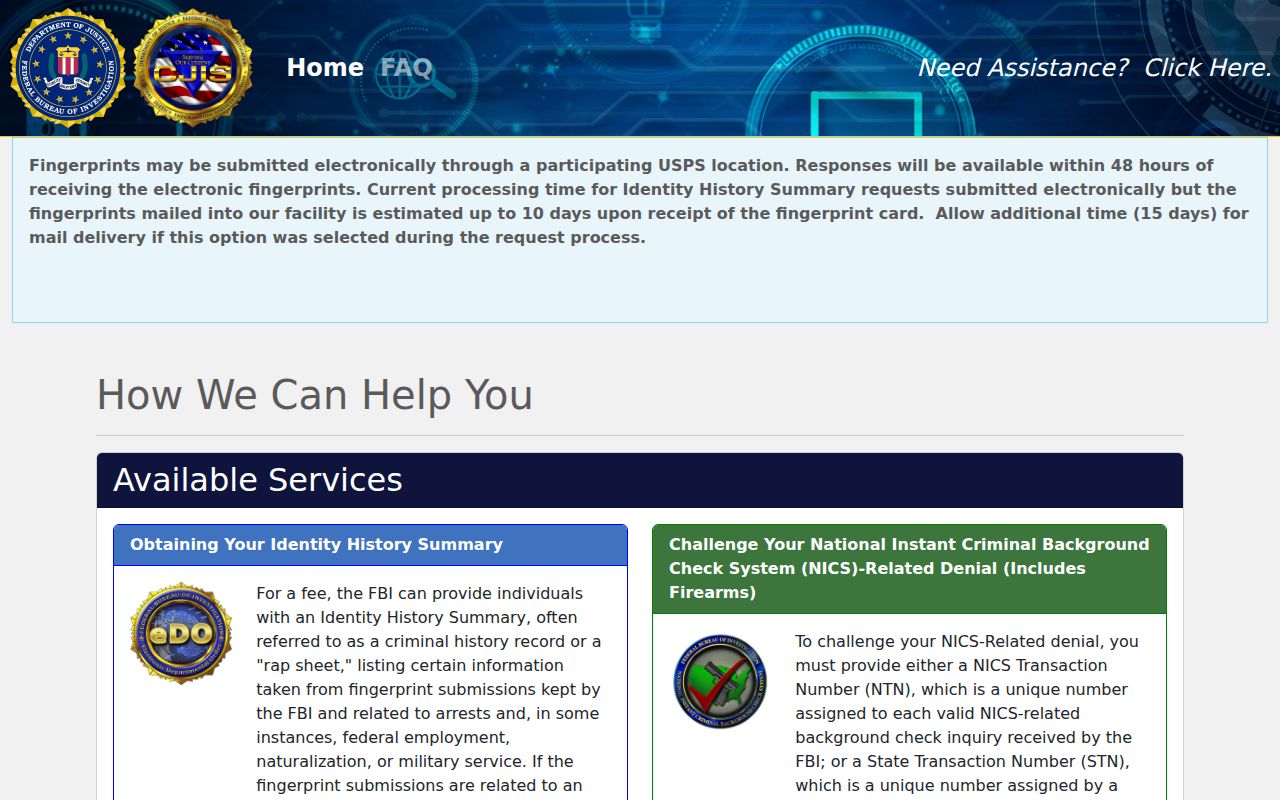
The federal response is a national identity-history product and does not replace a Marion court file or Oregon repository check.
The OSP check-products page sets out the state choices and Salem fingerprint counter.
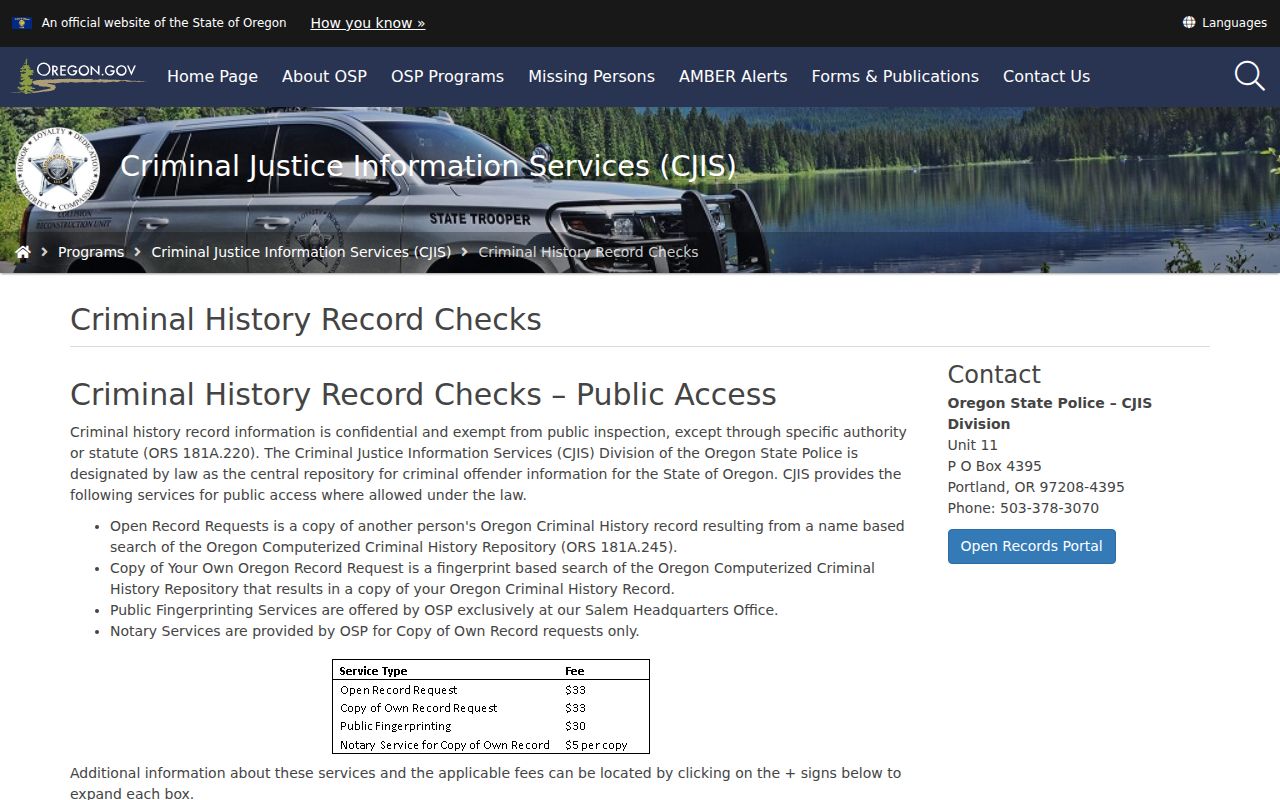
Use its current instructions before paying because identity method and public scope differ by product.
Marion County Criminal Record Counters
Two major Marion County record counters share 100 High Street NE in Salem, yet each serves a different purpose. The MCSO Criminal Records Unit is in the courthouse basement. It handles releasable deputy reports, local record checks, and sheriff public-record requests. The Circuit Court Records Department is on the first floor. It supplies filed complaints, registers, judgments, copy orders, and access to six no-charge public terminals.
MCSO Criminal Records Unit
100 High Street NE, basement
Salem, OR 97301
503-588-5071
Weekdays, 8 a.m. to 5 p.m.
Circuit Court Records
100 High Street NE, first floor
Salem, OR 97301
503-588-5101
Viewing: 8 a.m. to noon and 1 to 5 p.m.
The noon records-lobby closure matters even when the building remains open. Older Marion cases may also require staff help: court holdings reach back on microfilm to 1910, while records from 1987 forward exist in physical or digital form. A blank web result is not proof that an older file never existed.
The Marion County Sheriff's Office describes its public services and agency role.
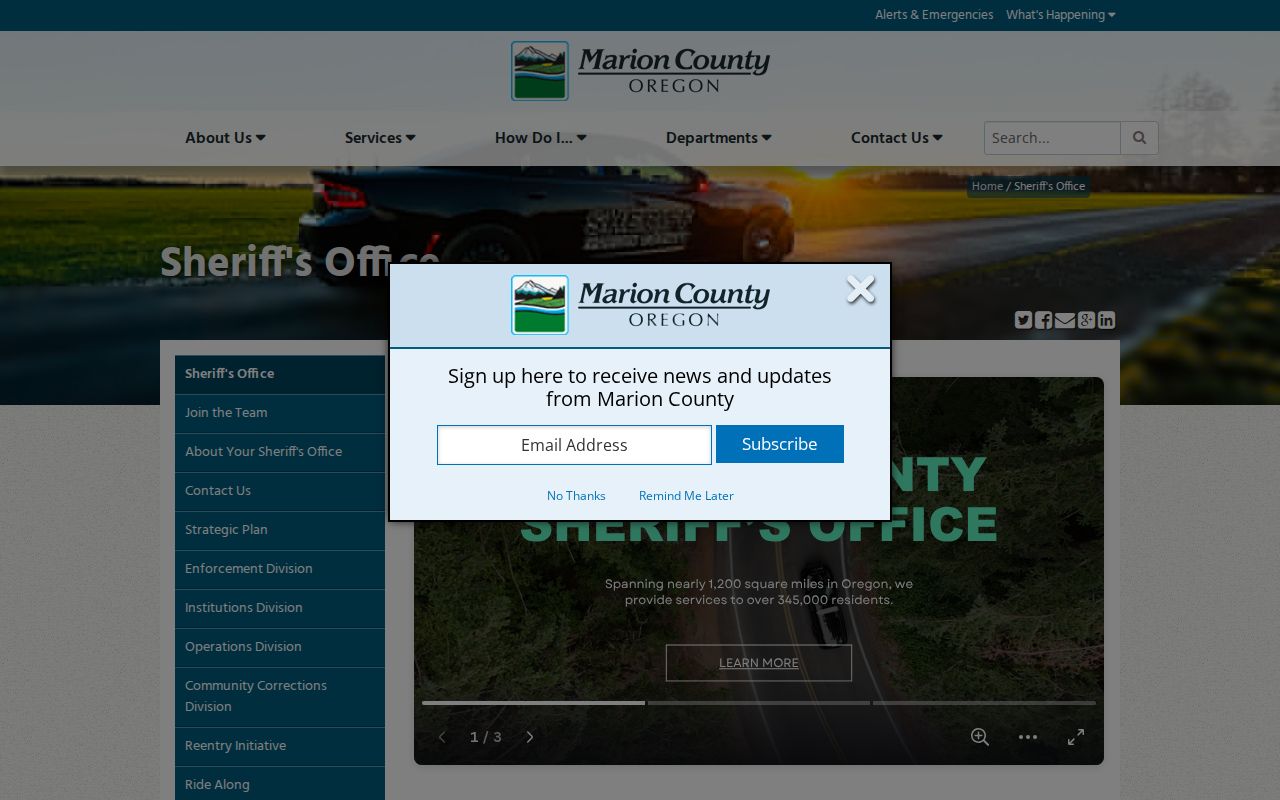
Report copies still go through the Criminal Records Unit rather than the court counter upstairs.
Types of Criminal Records
Marion County criminal records describe different stages of the justice process. The source and status matter as much as the name. A booked charge is an accusation at intake. A filed court charge reflects the prosecutor's decision. A conviction appears only after a guilty judgment or qualifying plea. Supervision and registry records arise later and have their own rules.
- Police and arrest reports record an agency's response, investigation, and arrest decision.
- Booking records identify county custody, initial charges, bail, and release data.
- Court files show complaints, pleas, motions, dispositions, judgments, and sentences.
- Repository records compile reportable Oregon events received by OSP CJIS.
- Supervision and registry records address DOC status, county supervision, parole authority, or public notification.
Readers seeking a filed case can use the full Marion County criminal court case process. Arrest and custody details have a separate official-channel path.
Marion County Custody Records
MCSO Jail Viewer covers people booked into the county jail, which holds about 400 adults and processes roughly 8,000 bookings each year. Its fields include booking number and date, location, arrest agency, agency and court case numbers, ORS charge, felony or misdemeanor level, bail, and release data. Since January 1, 2022, the public profile does not show booking photographs. A blank location has a specific local meaning: the person is in the 144-bed Marion County Transition Center.
After transfer to state prison, use Oregon Offender Search. VISOR provides custody-status notices, while its enrollment may require the roster inmate ID or a SID obtained from jail staff. These tools serve different jobs. Jail Viewer covers county custody, OOS covers sentenced state custody and supervision, and VISOR sends change notices.
What a Marion County Criminal Record Shows
The content changes by custodian, but reliable records usually connect identity, event, charge, and outcome fields. Read each field in context. A statute citation identifies an alleged or adjudicated offense, while the disposition states what the court did with that count.
| Name & Identifiers | Legal name, aliases, date of birth or age, and agency identifiers when public. |
|---|---|
| Arrest / Booking Data | Arresting agency, event date, booking number, custody location, and release status. |
| Charges & Statutes | Offense label, ORS citation, filed count, and felony or misdemeanor class. |
| Disposition | Dismissal, acquittal, conviction, or another recorded resolution for each count. |
| Sentence | Jail, prison, probation, financial terms, or other orders entered by the court. |
| Custody / Supervision | Current facility, release, probation, post-prison supervision, or parole data when public. |
Do not merge charges from separate rows or assume every arrest led to a case. For self-review, compare the court judgment with the fingerprint-confirmed OSP copy and use the stated correction or challenge channel if they conflict.
Marion County Warrant Fallbacks
No verified official public Marion County warrant list was found in the research. LEDS is for law enforcement, and the MCSO InTheKnow tip411 app is a tip channel rather than an authoritative warrant search. Begin with MCSO Records at 503-588-5071 or a written request, then contact the court that may have issued the warrant. Circuit Court uses 503-588-5105, Justice Court uses 503-576-7200, and a city bench warrant belongs with that municipal court.
Jail Viewer may show a cleared failure-to-appear violation after a warrant is served, but absence from a current roster proves nothing about an active warrant. A person resolving their own warrant should identify the issuing court and case, ask the court for appearance or bail instructions, and retain proof after clearance. Unserved, sealed, juvenile, or delayed entries may not be visible through public channels.
Public Access Laws
Oregon Public Records Law starts from a right to inspect public records, but exemptions and record-specific statutes control what may be released. Criminal-history dissemination rules make the OSP public product narrower than a subject's fingerprint record. Courts also restrict sealed, juvenile, protected-person, and other confidential material. A custodian may redact private data or delay release of an active investigative report.
Key Oregon laws:
ORS 192.311 to 192.478 establishes Oregon's public-record framework and exemptions.
ORS 181A.230 and 181A.245 govern challenges and public criminal-history responses.
ORS 137.225 sets Oregon's adult record set-aside process.
ORS chapter 419A protects juvenile records and governs juvenile expunction.
A records request should be precise. Name the incident, date range, location, parties, file type, and any known number. Precision helps the office locate existing records without asking it to create new analysis.
Marion Sheriff Record Requests
MCSO's Criminal Records Unit processes about 32,000 criminal-aspect reports drawn from nearly 70,000 annual calls and incidents. Those are workload counts, not totals of crimes or convictions. The unit enters reports in its records system, maintains wanted and missing-person entries in LEDS, and reports crime data into the FBI Uniform Crime Reporting chain.
A report with criminal charges is generally withheld until adjudication, unless the District Attorney authorizes release sooner. Requesters may submit the MCSO form at the basement counter, by mail, email, or fax. The unit may require payment before release and may redact exempt content. Its contact points are SMSRecords@co.marion.or.us, fax 503-588-7931, and PO Box 14500, Salem, OR 97309.
| MCSO item | Fee |
|---|---|
| Local criminal-history check | $15 |
| Standard letter-size copy | $0.25 per page |
| Certified copy | $5 plus copy charge |
| Audio or video work | Actual staff and media cost |
The MCSO Records Unit source shows the official counter, forms, and request routes.
Sealed, Expunged, and Restricted Records
Oregon calls adult relief a set aside under ORS 137.225. Eligibility depends on the offense, sentence, waiting period, and later history. The person files in the court that handled the case, usually using a motion and proposed order, notice to the prosecutor, and an OSP fingerprint-based set-aside check. Serious and specified offenses remain excluded. Juvenile expunction follows different rules under ORS chapter 419A.
A signed order is the start of downstream work, not a reason to assume every public system changed at once. Keep a copy. Allow the court, OSP, arresting agency, and other repositories time to apply it. Then check the court channel and a fingerprint-based Copy of Own Oregon Record. If an old state entry persists, the OSP challenge process under ORS 181A.230 provides a correction route.
Set aside is also distinct from a court diversion program. A diversion may change how an eligible pending charge ends, but only the final case register and signed orders show what happened in that case. Likewise, sealing or confidential treatment can restrict public display without destroying every government record. Ask the court clerk which order was entered, obtain the actual order, and use that document when following up with each agency that still shows an entry.
RESTORE and Marion Criminal Case Records
Marion County's response to HB 4002 began in September 2024, when low-level controlled-substance possession again became a misdemeanor. MCSO, city police, the District Attorney, LEAD navigators, and RESTORE Court coordinate a path that may direct an eligible case toward treatment and restitution. RESTORE means Restitution and Treatment On Route to Expungement. Its result is program-specific and should not be mistaken for automatic relief in all cases.
The Marion County District Attorney is the prosecution office within that local charge pipeline.
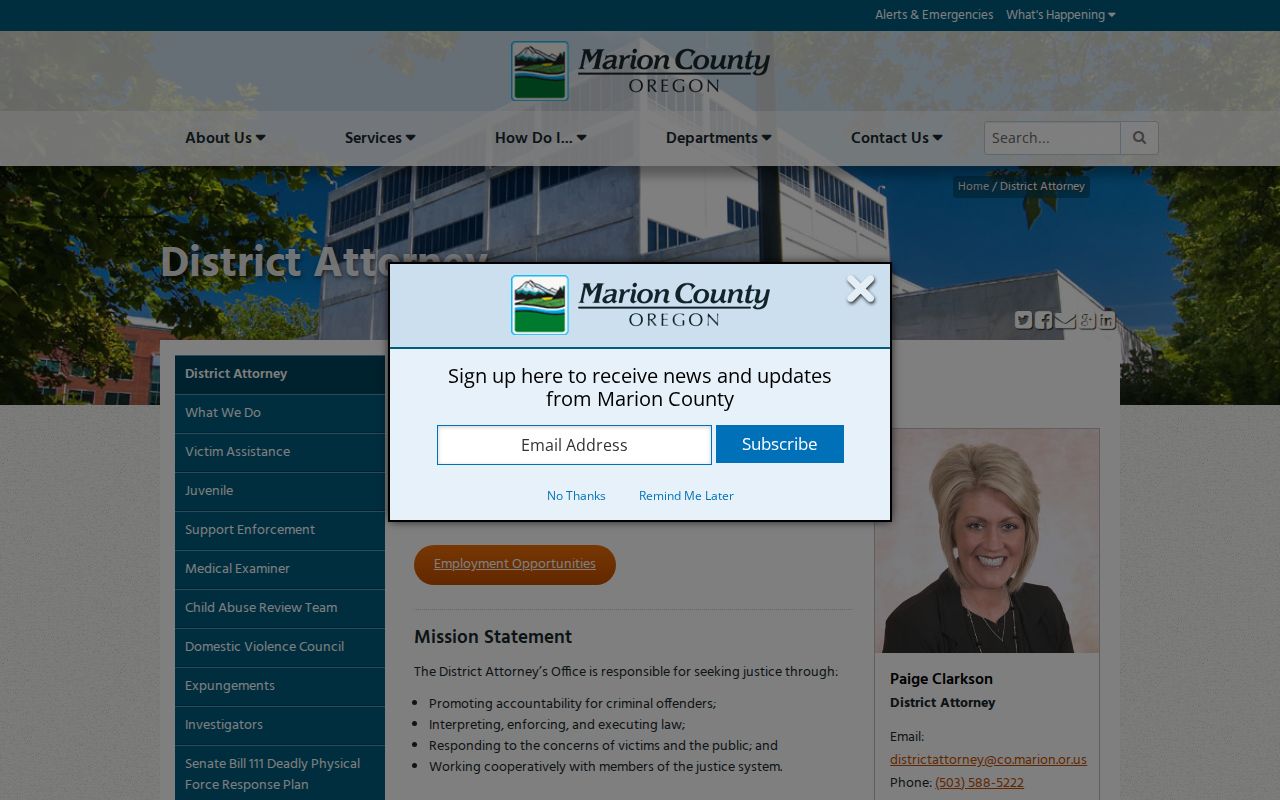
Court records remain the place to verify the filed charge, program outcome, disposition, and any later set-aside order.
Marion County Criminal Supervision Records
Probation is imposed by a court, while Marion County's Parole and Probation Division supervises adults locally under Oregon's community-corrections system. Oregon Offender Search may display a SID, status, location, caseload, sentence dates, aliases, and offense data, but it is not a certified record. The Circuit Court judgment controls the terms of probation. Marion Community Corrections reports about 2,700 clients, including 870 on limited supervision.
For most Oregon felonies committed on or after November 1, 1989, post-prison supervision replaced traditional parole. The Oregon Board of Parole and Post-Prison Supervision retains authority for specified groups and accepts record requests at its Salem office.
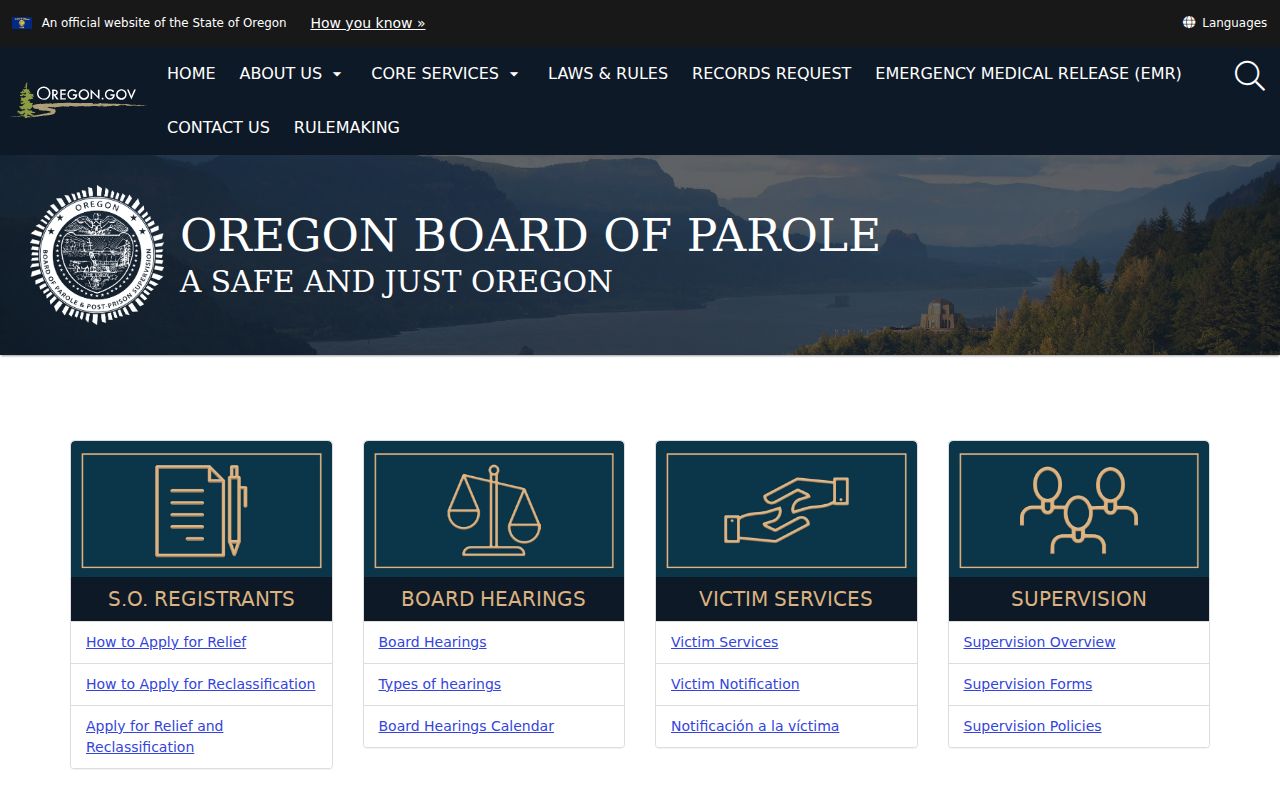
Confirm current local reporting details before visiting because county materials list two division addresses on the Aumsville Highway campus.
Criminal Records by City in Marion County
Salem, Keizer, and Woodburn police create their own incident records, while each municipal court has a limited local docket. Adult custody generally continues through the Marion County Jail. State felony and misdemeanor matters proceed in Circuit Court. City channels add report forms, local citation records, and municipal judgments that a county-only search may not explain.
Salem Criminal History
181,779 residents · City records portal, police records, and Municipal Court routes.
Keizer Criminal History
39,140 residents · Police Records counter and City Hall court fallback.
Woodburn Criminal History
31,948 residents · CivicPlus police requests and Municipal Court records.